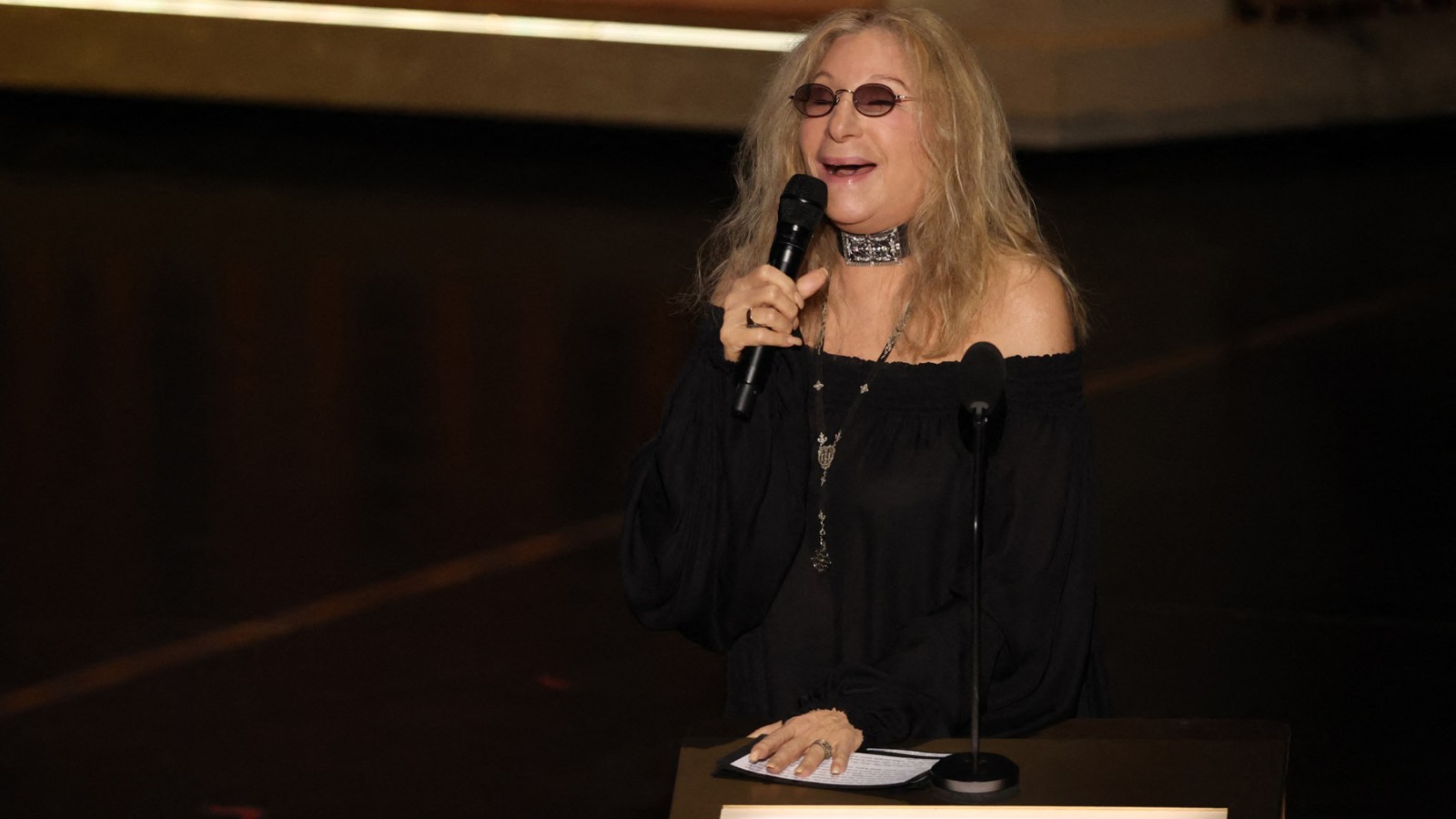
A Timeless Tribute: Barbra Streisand Honors a Hollywood Titan
The collective memory of Hollywood was stirred recently at the 2026 Academy Awards, as entertainment icon Barbra Streisand delivered a profoundly emotional tribute to her late "The Way We Were" co-star, Robert Redford. His passing in September at the age of 89 left an undeniable void, but Streisand's heartfelt remembrance served as a powerful testament to his colossal impact on cinema and culture. This moving event, a true
Barbra Streisand Robert Redford tribute, resonated deeply with audiences, reminding us all of Redford's multifaceted genius.
Streisand, who brought to life the passionate Katie Morosky opposite Redford’s enigmatic Hubbell Gardiner in the 1973 romantic drama, graced the Oscars stage not only with a poignant speech but also with a short, melancholic snippet of "The Way We Were," the film's iconic title track. Her voice, filled with an understandable tenderness, wrapped around the notes that have defined a generation's understanding of bittersweet love. "Bob had a real backbone on and off the screen," Streisand shared, describing him as an "intellectual cowboy who blazed his own trail." The depth of her connection was palpable as she confessed, "I miss him now more than ever," echoing the sentiments of millions of fans worldwide. This moving segment underscored the enduring power of their on-screen partnership and the genuine admiration that characterized their friendship. For more details on this memorable night, read
Barbra Streisand's Emotional Oscar Tribute to Robert Redford.
Crafting Chemistry: The Making of The Way We Were
The enduring magic of *The Way We Were* isn't just a testament to Sydney Pollack's direction or Marvin Hamlisch's timeless score; it’s intrinsically linked to the unparalleled chemistry between Barbra Streisand and Robert Redford. Yet, this cinematic alchemy almost didn't happen. Streisand, in her memoir "My Name is Barbra," revealed that Redford was initially reluctant to take on the role of Hubbell Gardiner, citing the character's lack of "backbone" or conviction. This early resistance, far from being a stumbling block, became a pivotal point in the film's development.
Streisand's unwavering conviction that only Redford could embody Hubbell led her to push scriptwriters for a richer, more nuanced character. Her insights were remarkably perceptive. She wrote, "What intrigued me most about Bob was his complexity. You never quite know what he's thinking, and that makes him fascinating to watch on screen." This understanding of Redford's singular talent — his ability to convey profound depth with understated performance — ultimately shaped Hubbell into the captivating, conflicted figure we remember. "Like the greatest movie stars, Bob understands the power of restraint. You’re never going to get it all… and that’s the mystery… that’s what makes you want to keep looking at him," she explained.
Redford's initial reluctance and his subsequent collaborative input significantly influenced the narrative, leading to a much more interesting and believable dynamic between Katie and Hubbell. This collaborative spirit highlights a crucial aspect of great filmmaking: the willingness of artists to challenge and refine material for the sake of authenticity. Interestingly, to cultivate the desired on-screen chemistry, Streisand noted that they purposefully didn't spend much time together off-set in the initial stages of filming. This deliberate distance allowed them to discover and build their characters' relationship organically, fostering an electric tension that captivated audiences. *The Way We Were* went on to become not just a classic love story, but also a poignant exploration of a "dark time in our history," as Streisand noted, reflecting the McCarthy era of the late '40s and early '50s.
The Art of Subtlety: Redford's Enduring Appeal
Robert Redford's acting prowess was characterized by a rare blend of charm, gravitas, and an almost elusive quality that made him perpetually fascinating. Streisand's observation of his "complexity" and "mystery" perfectly encapsulates his screen presence. He wasn't one for overt emotional displays; instead, his brilliance lay in the subtle flicker of an eye, a slight shift in posture, or an understated delivery that spoke volumes. This "power of restraint" allowed audiences to project their own feelings and interpretations onto his characters, making them universally relatable yet uniquely Redford.
Whether he was the charismatic outlaw in *Butch Cassidy and the Sundance Kid*, the intrepid journalist in *All the President's Men*, or the charming grifter in *The Sting*, Redford brought an intellectual depth to every role. His WASP-y good looks were often contrasted with a rugged individualism and a quiet intensity that defied simple categorization. He wasn't just a movie star; he was a storyteller who understood the power of the unspoken word, the weight of a long gaze, and the profound impact of a character's internal world. This commitment to subtle, nuanced performances is a valuable lesson for aspiring actors: sometimes, less truly is more. For more insights into Streisand's reflections on his work, explore
The Way They Were: Streisand on Robert Redford's Legacy.
Beyond the Camera: Robert Redford's Trailblazing Legacy
While Robert Redford's iconic status as an actor is undeniable, his legacy extends far beyond his captivating performances. He was, as Streisand so aptly put it, an "intellectual cowboy who blazed his own trail" not just in front of the camera, but significantly behind it and in the broader cultural landscape. Redford was an Academy Award-winning director, recognized for his poignant work on "Ordinary People." This transition from celebrated actor to respected filmmaker showcased his profound understanding of storytelling and his commitment to the craft.
However, perhaps Redford's most enduring and transformative contribution to the entertainment industry is the Sundance Film Festival and the Sundance Institute. Born from his vision to foster independent cinema and provide a platform for new voices, Sundance has become the premier destination for emerging filmmakers. It has launched the careers of countless directors, writers, and actors, fundamentally reshaping the independent film movement and proving that compelling stories exist outside the conventional studio system. His foresight in establishing this institute underscores his commitment to artistic freedom, diversity in storytelling, and the nurturing of raw talent. He didn't just advocate for these values; he built an institution around them.
An "Intellectual Cowboy" with a Backbone
Streisand's description of Redford as an "intellectual cowboy" perfectly encapsulates his unique blend of rugged individualism, thoughtful introspection, and unwavering integrity. This moniker wasn't just a nod to his affinity for Westerns or the Utah mountains where he made his home; it reflected his genuine character. Redford had a profound "backbone," not only in his cinematic choices but, crucially, in his personal and political convictions.
He was a vocal advocate for environmental protection, using his platform to champion conservation efforts and raise awareness about climate change long before it became a mainstream concern. He also stood firm in defending freedom of the press, understanding its vital role in a democratic society. These were not casual endorsements but deeply held beliefs that he actively supported. He embodied the very essence of standing for something, a trait he initially sought to inject into Hubbell Gardiner and which he so powerfully demonstrated throughout his own remarkable life. His commitment to these causes and to nurturing artistic integrity served as a powerful example of how public figures can leverage their influence for meaningful change.
A Legacy Etched in Time
Robert Redford was more than just a handsome face on screen; he was a profound talent, a visionary, and a committed humanitarian. The recent
Barbra Streisand Robert Redford tribute at the Oscars was a beautiful and fitting acknowledgment of a life extraordinarily lived, a reminder of the deep personal and professional bonds he forged, and the indelible mark he left on the world. From his iconic performances to his groundbreaking work with the Sundance Film Festival, Redford continuously pushed boundaries, championed independent voices, and lived a life of conviction. His quiet strength, intellectual curiosity, and unwavering commitment to his ideals truly made him an intellectual cowboy and a titan of Hollywood whose legacy will continue to inspire generations to come. He may be gone, but his spirit and his profound contributions to art and activism will forever resonate.